In a nutshell
- 🧠 Dopamine drives anticipation, acting as a teaching signal via reward prediction error, making uncertainty around notifications particularly compelling.
- 📳 Notifications function as cues that trigger craving before any reward, lighting up the salience network and nudging rapid, habitual checking.
- 🎰 Variable rewards—like unpredictable likes and messages—mirror slot-machine schedules, amplifying anticipatory dopamine and reinforcing the check-refresh loop.
- 🧩 Design patterns hook attention: red badges, pull-to-refresh, typing indicators, streaks, and read receipts intensify uncertainty, pressure, and compulsion.
- 🛠️ Break the cue–reward cycle by removing badges, batching alerts, hiding previews, using grayscale, “urge surfing,” and scheduling predictable social rewards.
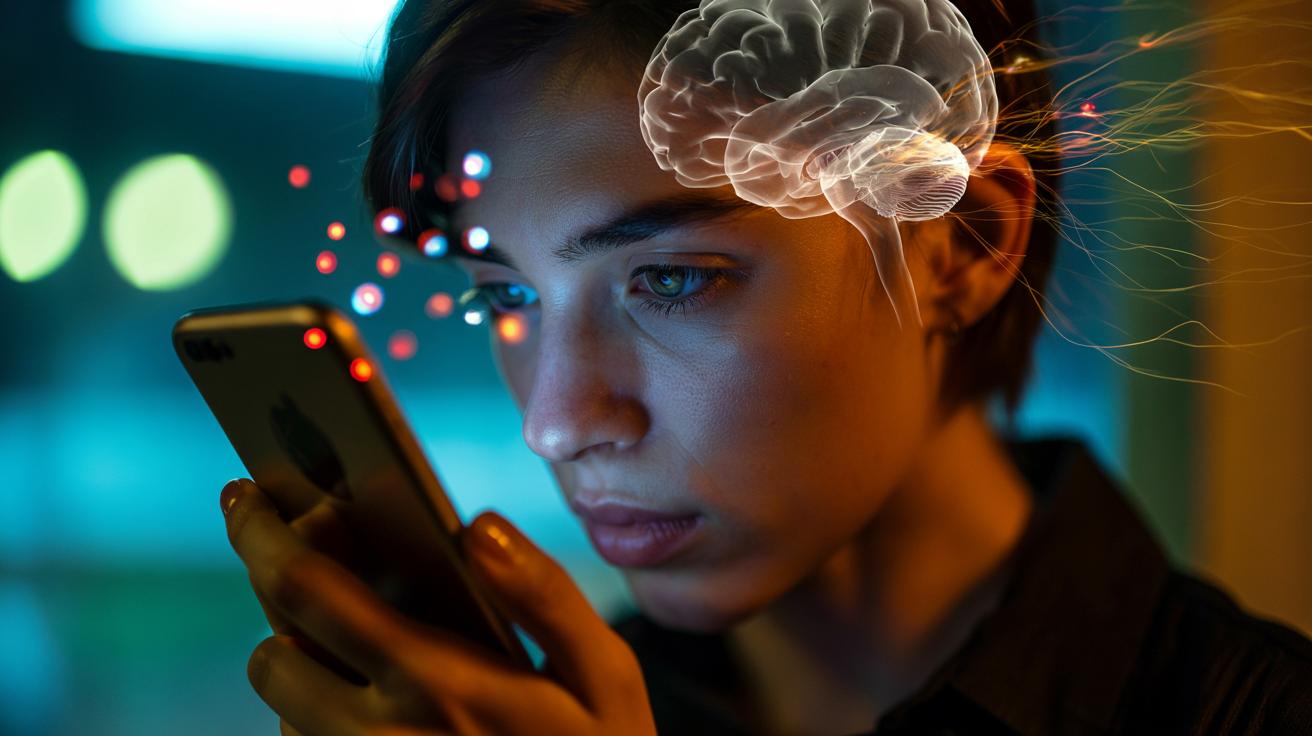
Your phone buzzes on the train. Thumb twitches, attention tilts, thoughts narrow. Before you even look, the brain has already started to calculate: could this be praise, conflict, work, love? That simmering urge is not simple pleasure but anticipation, a neurochemical bet that something meaningful might be coming. Social media platforms are built around that bet. They trade in notifications that turn ordinary moments into micro-lotteries, exploiting the way the brain weighs uncertainty, novelty, and social value. It’s the waiting, not the winning, that hooks us. Understanding why those tiny signals feel so compelling begins with a deceptively simple molecule: dopamine.
The Science of Anticipation
In popular culture, dopamine is miscast as the “pleasure chemical”. The science is subtler. Dopamine operates as a teaching signal, firing in short pulses from the ventral tegmental area to regions such as the nucleus accumbens and dorsal striatum. When a reward is predicted and arrives as expected, phasic dopamine spikes shrink. When a predicted reward fails to arrive, dopamine dips. The most powerful surge, however, occurs when a reward arrives unexpectedly. This is the famed reward prediction error, the brain’s way of updating its models of the world. It instructs us, often unconsciously, to repeat behaviours that preceded pleasant surprises.
Social notifications piggyback on this circuitry. Likes, messages, follows and shares are rewards, but the brain’s strongest teaching signal comes before the tap, when the alert appears and uncertainty blooms. Notifications are not rewards; they are cues. They light up the salience network and trigger dopamine-tuned attention, prompting us to seek resolution. Platforms lean into this, delivering alerts that are sometimes trivial, sometimes important, always potentially consequential. The result is a loop in which anticipation is amplified, the phone becomes a slot machine, and your behaviour is quietly, efficiently shaped.
Variable Rewards and the Notification Loop
Classic behavioural psychology shows that variable ratio schedules—rewards delivered unpredictably—are superb at training persistent behaviours. Slot machines use them. So does your feed. Not every refresh yields a thrilling comment; not every buzz is the message you want. That uncertainty heightens anticipatory dopamine and increases checking. The loop is tight: cue (buzz or badge), craving (what might it be?), response (open the app), reward (sometimes meaningful, sometimes not). When a reward is ambiguous or delayed, the brain leans further into prediction, sharpening attention and nudging you to try again. Short, repeatable actions—swipe, tap, pull-to-refresh—make the cycle rapid.
Small design choices intensify the effect. Red badges hijack visual salience. “Typing…” indicators tease imminent resolution. “Seen” receipts create social pressure, adding stakes to the cue. Each micro-signal pushes the system into a high-anticipation state where the next interaction might carry social status, intimacy, or threat. Anticipation, not consumption, drives habitual checking. Over time, the loop becomes less about satisfaction and more about reducing the discomfort of not knowing—a hallmark of habit formation. When you do get a meaningful reply, the prediction error stamps in the behaviour even more deeply, making the next cue harder to resist.
Design Patterns That Hook the Brain
Designers rarely need nefarious intent; the metrics reward engagement, and engagement rewards designs that exploit uncertainty and social relevance. Here are common patterns that supercharge anticipation, and what they do to the mind and body.
| Feature | Psychological Mechanism | Dopamine/Anticipation Role | Likely User Effect |
|---|---|---|---|
| Red badges | Visual salience, loss aversion | Elevates cue value before content | Compulsive clearing, rapid checking |
| Pull-to-refresh | Variable ratio schedule | Repeated prediction error opportunities | “Just one more” swipes |
| Typing indicators | Imminence cues, social tension | Spikes anticipatory arousal | Hovering, anxious waiting |
| Streaks and counters | Commitment, loss aversion | Turns absence into negative reward | Daily compulsion, reduced breaks |
| Read receipts | Social evaluation pressure | Couples anticipation with reputational stakes | Immediate responding, rumination |
Each feature turns the phone into a high-frequency uncertainty generator. The body follows: quickened pulse, shortened breath, micro-muscle tension in neck and jaw. Attention narrows, crowding out tasks that require depth. The price is familiar—fragmented focus, interrupted sleep, a creeping sense of being “always on”. When the interface is tuned for anticipation, your day is tuned for interruption. The solution is not moral panic but clear-eyed literacy about the mechanisms at work, and informed choices about which cues you allow to occupy your environment.
Breaking the Cue–Reward Cycle
Because cues drive cravings, the most effective lever is environmental. Remove badges from social apps; keep banners for truly urgent channels only. Batch delivery so non-urgent alerts arrive at set times, letting anticipation rise and fall predictably rather than constantly. Silence lock-screen previews to reduce the cue’s information value. Put social apps off the home screen; distance reduces reflex. A simple rule helps: if you open an app, do it intentionally—by search or voice—not by muscle memory. Make rewards slightly harder to reach and cues dramatically harder to see. Watch your attention stabilise within days.
Behavioural tweaks compound. Introduce a 15–30 second “urge surf” before opening a notification; anticipation often dissipates naturally. Use grayscale modes to blunt salience. Set “Do Not Disturb” windows that cover meals, deep work, and sleep. Replace pull-to-refresh with “check once per hour” rituals. In conversation, leave the phone out of sight; absent cues, craving cools. Finally, invert the loop: create predictable rewards—scheduled calls, curated newsletters, intentional group chats—so social nourishment arrives on your terms. You don’t have to quit social media to reclaim it; you only have to retake control of the cues.
Dopamine doesn’t demand devotion; it simply optimises for learning. Social media capitalises on this by making anticipation cheap and constant, and our attention obligingly rearranges itself around the next uncertain ping. When you understand the machinery—cues, prediction errors, variable rewards—you gain leverage. Small, structural changes can shrink the loop and restore headroom for work, rest, and relationships that are richer than a badge count. The question is no longer whether notifications are addictive, but what you will do about it. Which cues will you keep, which will you kill, and how will you redesign your day to favour depth over the buzz?
Did you like it?4.3/5 (21)