In a nutshell
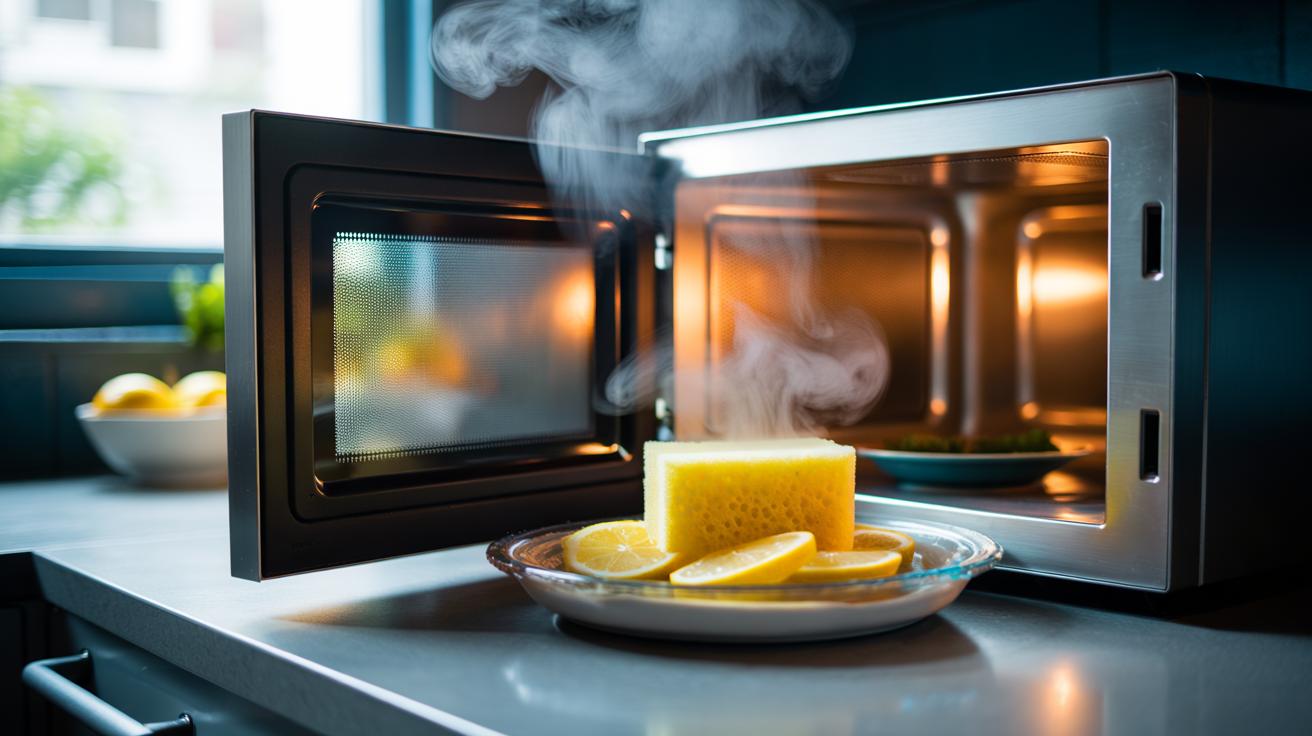
- 🍋 A lemon-soaked sponge harnesses steam and citric acid to loosen grime so the microwave “cleans itself” in about two minutes plus a short rest.
- ⏱️ Step-by-step: soak with lemon + water, heat 1½–2 minutes on High, rest 60–90 seconds, then wipe while warm; keep the sponge wet and handle with tongs if hot.
- 🛡️ Safety essentials: avoid metal or dry sponges, start at 90 seconds for high-wattage units, stop if arcing or odd smells, and wash the turntable separately.
- 🌱 Benefits: an eco-friendly, low-cost, food-safe alternative to chemical sprays that’s gentler on finishes and rapidly removes odours.
- 🧽 Troubleshooting: repeat the cycle for stubborn splatter, add bicarbonate of soda for mild abrasion, use a vinegar bowl for extra vapour, and deodorise overnight with dry soda.
If your microwave looks like a Jackson Pollock after a week of midnight snacks, here’s the fast, fragrant fix: a lemon-soaked sponge that turns grime into wipe-away softness in minutes. The trick isn’t magic. It’s chemistry and steam. A saturated sponge becomes a portable reservoir; fresh lemon provides citric acid and oils that loosen fats and neutralise odours. Heat does the rest. In two minutes, the cavity fogs, droplets form, and stains surrender. It’s cheap, low-waste, and surprisingly satisfying. The secret is moisture—lots of it—and a clean, microwave-safe sponge. No harsh sprays, no scrubbing marathons, no lingering fake citrus smell. Just heat, wait, wipe, done.
How the Lemon-Sponge Method Works
Microwaves excite water molecules. A fully soaked sponge is essentially a steam engine in miniature. As it warms, it emits vapour that condenses on the cavity walls, softening splatters that have baked into obstinate stickers. Meanwhile, the lemon’s citric acid breaks bonds in greasy residues, while natural limonene oils act as gentle solvents. Steam lifts; acid loosens; the sponge wipes. That triad makes this method feel like the microwave “cleans itself,” because the chamber’s own condensation does half the hard work.
Timing matters. Two minutes on high is typically enough to saturate the interior with warm moisture without desiccating the sponge. Go longer only if your microwave is low wattage or caked with old spills. Then, the crucial pause: a closed-door rest of 60–90 seconds allows droplets to soak into crusty patches. Think of it as a tiny sauna for stains. The result is soft debris that glides off with a single pass, leaving a fresh, citrusy scent. Minimal elbow grease, maximum payoff.
Step-By-Step Guide and Safety Notes
Choose a plain cellulose sponge. Avoid scrub pads with metal fibres. Saturate it with a mix of fresh lemon juice and water—roughly half a lemon plus 3–4 tablespoons of water per sponge. The goal is dripping-wet, then gently squeezed so it’s heavy and glossy but not streaming. Place the sponge on a small, microwave-safe dish to catch drips. Heat on high for 1½ to 2 minutes. Let it stand for at least one minute before opening the door. Open carefully, face away from the rush of steam, and use tongs if the sponge is too hot. Wipe the ceiling, sides, door, and the turntable’s underside.
| Action | Time/Setting | Purpose |
|---|---|---|
| Soak sponge in lemon + water | 30–60 seconds | Loads moisture and citric acid |
| Microwave sponge on dish | 1½–2 minutes, High | Generate steam; warm oils |
| Closed-door rest | 60–90 seconds | Allow condensation to soften grime |
| Wipe all surfaces | 2–3 minutes | Remove loosened residue and odours |
Never run the microwave with a dry or barely damp sponge; it can scorch. If your unit is over 900W, start at 90 seconds and check. Use only microwave-safe dishes. If there’s visible arcing or a chemical smell, stop immediately, let it cool, and inspect for foil fragments or metallic trim. Finish by rinsing the sponge in hot water, then wringing it out to dry.
Why It Beats Chemical Sprays
Cleaning foams promise “professional results.” They also leave residues you wouldn’t want near tomorrow’s porridge. A lemon-soaked sponge offers a safer, simpler alternative. There’s no synthetic fragrance clouding your kitchen, no sticky surfactant film to reheat into lunch. Citric acid is food-safe in typical kitchen quantities and rinses clean. Costs plummet, too: one lemon, reused across two or three sessions, outperforms a pricey trigger bottle. And you skip plastic bottles, propellants, and complicated ingredient lists.
Speed matters on busy weeknights. This routine is a two-minute heat cycle plus a one-minute rest—short enough to fit between plating and the first forkful. It’s also kinder to finishes. Chemical degreasers can dull interior coatings over time; steam is gentler, relying on physics rather than harsh chemistry. For renters, it’s a deposit saver. For families, it’s less to lock away from curious hands. Clean, deodorise, and preserve—all with a leftover lemon half and tap water. That’s effective home economics, not a compromise.
Troubleshooting Stubborn Stains and Odours
Burnt sugar or marinara splatter that’s been baked in for months may shrug off a single cycle. No drama. Run the heat-and-rest sequence again with a freshly wetted sponge. Add a teaspoon of bicarbonate of soda onto the sponge before the second pass; it provides gentle abrasiveness during the wipe. For rancid oil smells, especially after fish or fried leftovers, squeeze an extra teaspoon of lemon juice into the sponge to boost acidity, then wipe door seals and vents where odours cling. Always remove the turntable and wash it separately in hot, soapy water.
If the interior is stained by turmeric-heavy dishes, acids help but may need support. Mix a small bowl of water with a tablespoon of white vinegar and park it beside the sponge during the cycle for additional vapour strength. Do not use metal scouring pads in the microwave, and don’t soak the control panel; use a barely damp cloth there. Persistent popcorn smoke smells? Place a saucer of dry bicarbonate of soda inside overnight after the lemon clean. It passively absorbs odours, leaving only a bright, subtle citrus note by morning.
A microwave that “cleans itself” in minutes sounds like a gimmick until you try it. The combination of steam, citric acid, and a properly soaked sponge turns stubborn crud into an easy wipe-down, with zero harsh chemicals and almost no effort. It’s quick, frugal, and kinder to the appliance you use every day. Keep the sponge wet, respect the stand time, and work while the surfaces are warm. The result is a cavity that smells like lemon zest, not last night’s curry. Will you make this two-minute ritual a weekly habit—or adapt it into your own signature kitchen shortcut?
Did you like it?4.7/5 (30)