In a nutshell
- 🧪 The science: sodium bicarbonate acts as a mild pH buffer, neutralising acidic odour compounds (like isovaleric acid) while its fine particles absorb moisture for a double deodorising effect.
- 🧴 DIY sprinkler: repurpose a spice jar or make a coffee-filter sachet; fill with bicarbonate of soda, optionally add cornflour for moisture control and a drop of essential oil (pre-dried) for light scent.
- 🌙 Overnight routine: start with dry shoes, use 1–2 teaspoons per shoe, dust under/over insoles, tap to distribute, and leave with airflow for 8–12 hours; in the morning, shake out and brush/vacuum residue.
- ⚠️ Safety and materials: go light on suede/nubuck, avoid damp shoes, don’t mix with acidic cleaners, label and store the shaker safely, and refresh the powder monthly to prevent clumping.
- 🌍 Practical gains: costs pennies, reduces reliance on heavy fragrances, supports sustainable care, and with regular use keeps trainers odour-free while extending insole and upper longevity.
There’s a simple, low-cost fix hiding in your baking cupboard that can rescue the most beleaguered trainers by morning. Call it a baking soda sprinkler, call it a shaker, call it a life-saver for commutes and gym kits. The principle is disarmingly simple: a dusting of bicarbonate of soda pulls moisture, neutralises odours, and leaves footwear fresher with minimal faff. It’s gentle on most materials, safe for families, and kinder to the planet than heavy fragrance sprays. Used correctly, it can make shoes odour-free overnight without masking smells. Here’s how and why it works, plus the best way to apply it without mess or residue.
Why Baking Soda Works on Shoe Odours
The science sits in the name. Sodium bicarbonate is mildly alkaline, so it neutralises the acidic compounds responsible for sweaty-shoe stink, especially isovaleric acid left behind by skin bacteria. That pH shift reduces the volatile smell molecules that waft up when you loosen your laces. Beyond chemistry, the powder’s microcrystalline structure offers considerable surface area, soaking up lingering moisture and the odour compounds dissolved in it. Less damp means a less welcoming environment for odour-causing microbes. Drying plus neutralising gives you a double win by morning.
It’s not a hospital-grade disinfectant, and it doesn’t need to be. Shoes don’t require sterility; they need balance. Baking soda offers a pH buffer that nudges conditions away from the bacteria-favouring, sweaty side and toward a calmer, fresher middle. The result is subtle: no aggressive perfume, just the absence of funk. That matters for leather and knit uppers where heavy sprays can cling. For tough cases, repeat the process or pair with good airing habits. A little powder goes a long way when the chemistry is on your side.
How to Make a Simple Baking Soda Sprinkler
A purpose-made shaker keeps things tidy and controlled. Rinse and dry a clean spice jar or an empty salt shaker, then fill it with bicarbonate of soda. Some people mix in a teaspoon of cornflour per 3–4 tablespoons of soda for extra moisture capture. If you love a hint of scent, add two drops of essential oil, shake, and let it dry fully before using. For a no-shaker option, spoon the powder into a coffee filter or thin sock, tie it off, and you’ve got a disposable sachet. Keep the mesh fine to avoid clumps and grit.
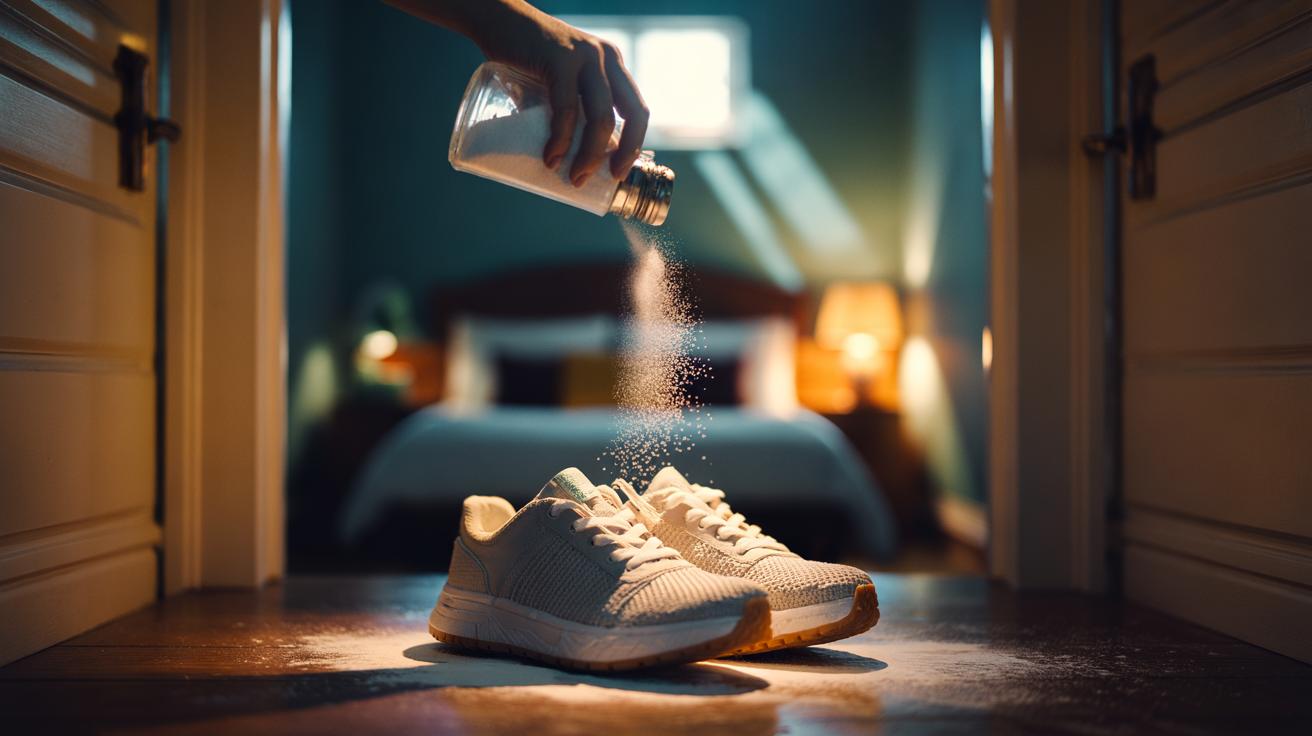
Application is easy: use about 1–2 teaspoons per shoe, sprinkled evenly under and on top of the insole area. Tap the shoe to distribute, then leave it overnight. In the morning, shake out the powder and brush any residue from seams. Do not over-apply; excess powder can cake and be harder to remove. For households with kids or pets, store the shaker high and labelled. Below is a quick guide to components and quantities to keep your DIY kit consistent and effective.
| Component | Quantity | Purpose | Notes |
|---|---|---|---|
| Bicarbonate of soda | 3–4 tbsp (jar fill) | Odour neutraliser | Food-grade is ideal; fine powder distributes well |
| Cornflour (optional) | 1 tsp per 3–4 tbsp soda | Moisture booster | Improves clump resistance in humid homes |
| Essential oil (optional) | 1–2 drops | Light fragrance | Allow to dry; avoid direct contact with leather |
| Shaker or filter sachet | 1 container | Controlled dosing | Fine holes prevent mess and hotspots |
Overnight Routine: Step-by-Step for Fresh Trainers
Start dry. Never powder muddy or soaked shoes. Remove the insoles if they’re removable; sprinkle half a teaspoon beneath each insole and another half on top, then seat them back. For non-removable insoles, lift the tongue and dust the heel cup, arch and toe box evenly. Two light passes beat one heavy blast. Now give each shoe a gentle tap-tap to settle the powder into seams and stitching where sweat collects. Place them by a radiator (not on it) or near open air flow. The key is time and breeze. Eight to twelve hours does the job for most pairs.
Morning is reversal. Step outside, clap the soles together to eject the powder, then use a soft brush or microfibre cloth to flick away residue from edges and eyelets. If a knit upper holds dust, a quick pass with a handheld vacuum clears fibres without stress. Leather owners should follow with a dab of conditioner on scuffs to keep uppers supple. Before wearing, check the toe box for leftover powder—your socks will thank you. For persistent odours, repeat the routine two nights running and alternate your footwear during the day to keep moisture loads low.
Safety, Materials, and Common Pitfalls
Most fabrics welcome baking soda, but finesse matters. Suede and nubuck can display pale traces if overloaded; keep doses tiny and brush thoroughly. Smooth leather tolerates soda well, though any powder left in creases looks chalky. Test first on a hidden patch if you’re fussy about finish. Don’t mix baking soda directly with acidic cleaners in-shoe; the fizz is dramatic and the moisture unhelpful. If you’ve used vinegar or citric acid elsewhere, let footwear dry completely before the baking soda stage. And never add wet essential oils straight to leather—pre-dry in the jar.
Common slip-ups? Using too much powder, leaving shoes damp, or skipping the morning brush-out. Excess powder cakes, trapping odour rather than lifting it. Damp negates the desiccating effect. Skipping the clean-up leaves residue lines. Keep the shaker lidded and dry to avoid clumping. Replace the contents monthly for best performance; the cost is pennies. If insoles are crumbling or heavily saturated, swap them—no powder will restore decayed foam. For sustainability, choose food-grade bicarbonate in cardboard boxes and repurpose old spice jars. Consistency beats heroics: small, regular doses maintain a neutral, odour-free baseline.
With a nimble shaker and a minute of effort each night, you can turn rank trainers into reliable companions by sunrise. The trick isn’t perfume, it’s balance: drying perspiration, neutralising acids, and resisting bacterial bloom without harsh chemicals or heavy spending. For parents, runners, commuters and anyone cramming more life into fewer pairs, this is the dependable, repeatable habit that earns its place by the door. Keep it light, keep it dry, keep it regular. What’s your current shoe-refresh routine, and where could a simple baking soda sprinkler fit in to save you time—and your nose—this week?
Did you like it?4.5/5 (20)