In a nutshell
- 🌡️ The fridge-safe banana peel method uses cold extraction to deliver a gentle, low-odour, potassium-leaning tonic that helps revive tired plants.
- 🧪 Clear steps: chill peel 24–72 hours, cold-soak 12–24 hours at ~1 peel/500 ml, strain, then dilute 1:4 (general) or 1:6 (sensitive); store up to 5 days refrigerated.
- 🛡️ Safety first: avoid room-temperature ferments, rinse peels to reduce residues, water soil—not leaves—and test on one plant; discard if cloudy or sour.
- 🪴 Best uses: flowering annuals, container tomatoes, peppers, roses, and sturdy foliage plants; skip for seedlings and use sparingly for succulents or when soils are already high in potassium.
- ⚖️ Supplement, not substitute: pair with a balanced fertiliser to cover nitrogen; apply every 2–3 weeks to prevent nutrient imbalance.
Banana peels have long been tossed in compost caddies without a second thought, yet a growing number of thrifty gardeners now swear by a smarter detour: the fridge-safe banana peel. Chilled, not left to stew, the peel becomes a simple tonic that coaxes tired houseplants and balcony blooms back to life. It’s clean, quick, and low risk. No lingering fruit-fly drama, no sour kitchen odours. Instead, you get a whisper of potassium-rich nourishment and a trace bouquet of micronutrients, ideal for light, regular boosts. The trick is temperature and time—controlled, brief, and tidy. Done right, this method turns yesterday’s snack into today’s plant pick‑me‑up.
What Makes Banana Peel a Plant Reviver
Banana peel is naturally high in potassium (K), the element plants use to regulate water flow, strengthen cell walls, and support flowering. There’s also a dose of phosphorus, calcium, and trace magnesium and manganese, plus polyphenols that can subtly nudge root vitality. This is not a complete fertiliser; nitrogen is modest. That’s why the peel works best as a supplement, not a substitute for balanced feeds. Still, where leaves droop and flowers stall, a gentle K‑leaning boost can make a visible difference. Think “tonic”, not “meal”.
Why the fridge? Unchilled peel infusions often tip into anaerobic fermentation. That breeds odours, invites fruit flies, and risks root stress from organic acids. Chilling slows microbial bursts and keeps extraction mild and predictable. You’re not chasing maximum concentration; you’re avoiding microbial chaos. The result is a cleaner, clearer liquid with a faint tea hue and a soft, sweet note, rather than the sourness that signals trouble. By controlling microbes, you control risk. Plants get accessible K and companions, minus the mess that puts people off DIY extracts.
The Fridge-Safe Method, Step by Step
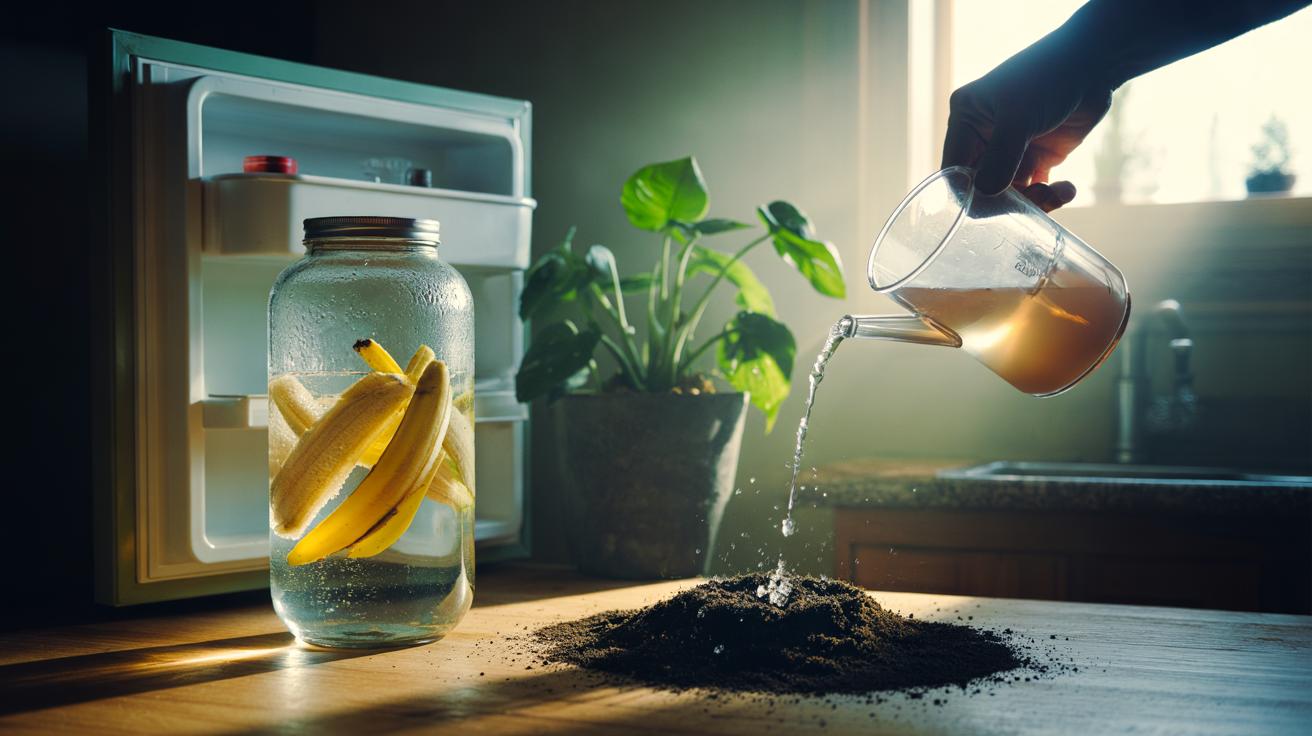
Rinse one fresh peel to remove residues, then slice it into small squares. Seal in an airtight tub and refrigerate for 24–72 hours to cool, not cure. Tip the chilled pieces into a jar and cover with boiled-and-cooled water at roughly 1 peel per 500 ml. Steep in the fridge for 12–24 hours. Strain thoroughly to remove fibres. Dilute the liquid 1:4 with water for general use (make it 1:6 for sensitive houseplants). Water the soil, not the foliage, and stop when you see a light run‑through. Compost the solids or bin them. Never leave the mixture at room temperature beyond 24 hours.
| Step | Key Detail | Why It Matters |
|---|---|---|
| Chill Peel | 24–72 hrs in fridge | Slows microbes; cleaner extract |
| Soak | 12–24 hrs, cold | Gentle nutrient release |
| Dilution | 1:4 (general), 1:6 (sensitive) | Reduces burn and odour risk |
| Storage | Up to 5 days, fridge | Discard if cloudy or sour |
| Frequency | Every 2–3 weeks | Avoids nutrient imbalance |
When in doubt, dilute more. If the liquid turns cloudy or smells sharp, pour it on the compost rather than your ficus. The point is consistency, not potency. A steady, light hand outperforms heroic doses that court root stress.
Safety, Pests, and Common Mistakes
Most DIY fertiliser mishaps start with time and temperature. Room‑temperature “banana teas” are fly magnets and can sour fast. The fridge method cuts that risk by design. Still, hygiene counts: clean jars, clean knife, clean hands. Rinse peels to reduce pesticide residues, especially on non‑organic fruit. Test on one plant before scaling. If your soil already tests high in potassium, skip this tonic for a cycle. Excess K can crowd out magnesium uptake, leading to interveinal yellowing, the opposite of what you want.
Other pitfalls: over‑concentration, drenching already wet media, and pouring on leaves. Keep to soil. Aim for morning applications so any surface moisture clears fast. For succulents and cacti, use sparingly—once a month at most, if at all. Indoor gnats? Straining well and avoiding room‑temp brews makes them less interested. Pet households should store the jar high and sealed; the sweet scent can attract curious noses. And remember: this is a supplement. Pair it with a balanced, reputable fertiliser during peak growth for rounded nutrition.
When to Use, When to Skip
Use fridge‑safe peel tonic when you want a gentle lift for flowering annuals, balcony tomatoes in containers, peppers, roses, and sturdy foliage plants like pothos or monstera. It shines mid‑season, when feeding is regular and plants are active. After repotting, wait two weeks before resuming. During heatwaves, apply lightly in the cool of morning. For orchids, keep it very dilute and infrequent; their roots prefer clarity. Seedlings and recently propagated cuttings are better served with plain water and patience.
Skip the tonic if you already apply high‑K feeds (for example, bloom boosters), if your water is very hard and leaves salt crusts, or if a recent soil test flags elevated K. Hungry, pale foliage often signals nitrogen need—use a balanced fertiliser instead. Sandy soils benefit, but don’t rely on peel water to fix structural issues; add compost for that. The bigger picture is resourceful gardening: low waste, targeted boosts, fewer bottles. Used judiciously, this method turns a kitchen leftover into a precise, plant‑friendly nudge.
The fridge‑safe banana peel is a practical bridge between thrift and science: cold‑controlled extraction, careful dilution, and calm expectations. It won’t replace a full feeding regime, yet it can revive flagging blooms and perk up foliage with minimal mess. It’s cheap, fast, and surprisingly elegant when handled like a tonic rather than a cure‑all. Treat the jar like fresh food, not a ferment, and your plants will thank you. Will you try a chilled peel brew on one test plant this fortnight—and track the results like a pro gardener’s experiment?
Did you like it?4.6/5 (22)