In a nutshell
- 🌱 Harness a warm rice packet as a gentle heat source to stabilise a 22–26°C microclimate, delivering the key germination trio: moisture, oxygen, and steady temperature.
- 🔧 Follow a simple setup: damp (not wet) paper in a partially sealed bag, rice warmed to hand-hot, placed side by side in a box; check every 12–24 hours and transplant at radicle emergence.
- ⏱️ Expect quicker sprouting for warmth-lovers like tomatoes, basil, and chillies—often cutting typical soil times from a week or more to just 3–6 days when conditions are stable.
- 🧪 Respect the science: the Q10 effect speeds enzymes within safe bounds; avoid oversaturation, keep light ventilation, and prioritise clean handling to deter damping-off.
- 🇬🇧 Ideal for UK homes: a low-cost, budget propagator that evens out fickle radiator and windowsill swings—proving consistency over intensity wins healthy, uniform starts.
Britain’s gardeners love a simple hack. The latest? The rice packet trick, a pantry-to-pot tip that gets seeds up and away in a fraction of the usual time. Instead of expensive heat mats, a warmed packet of rice acts as a gentle heat source for a zip-bag germination setup, creating the steady warmth and humidity young seeds crave. The result can be dramatic. Tomatoes, basil, even capricious chillies pop far faster when conditions are right. The secret isn’t sorcery but science: stable warmth plus moisture accelerates germination enzymes. Done carefully, it’s clean, cheap, and surprisingly precise, a small domestic upgrade with outsized results in trays and windowsills across the UK.
What the Rice Packet Trick Actually Does
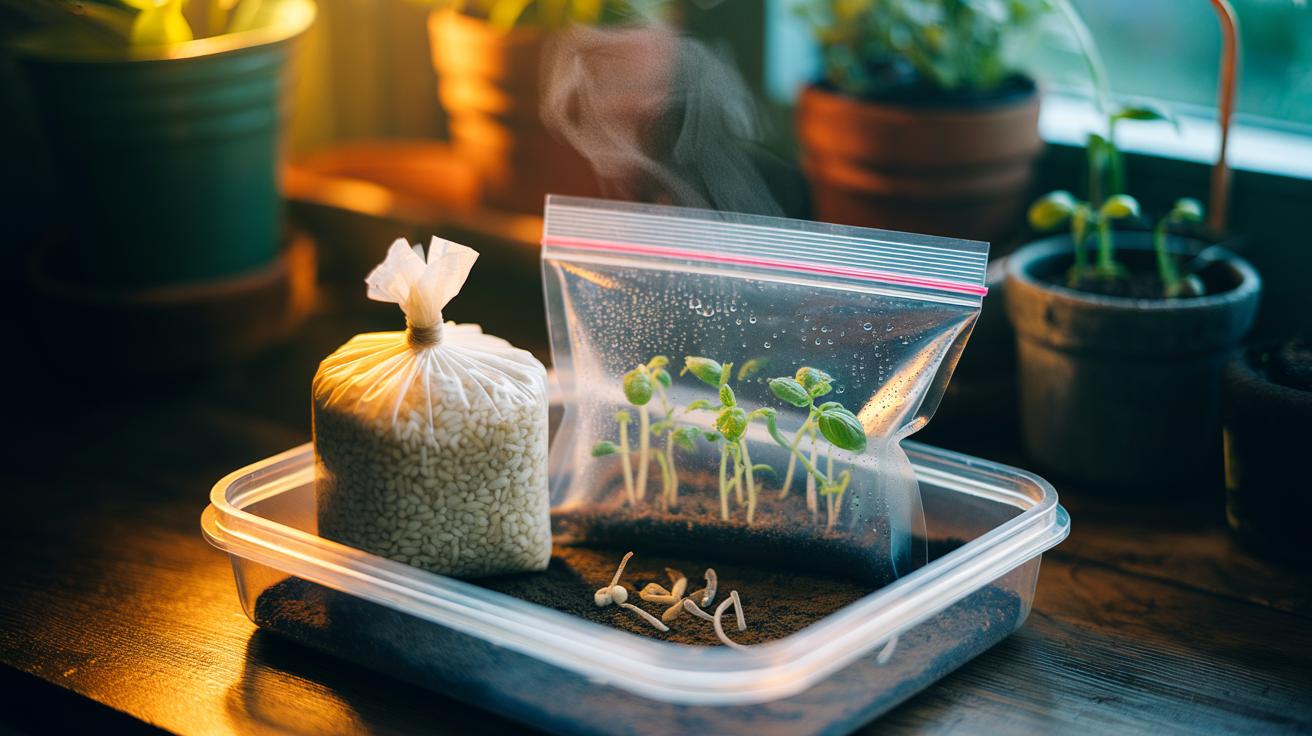
Seeds wake when three things align: moisture, oxygen, and temperature. The rice packet trick delivers two of them superbly. A microwaved pouch of uncooked rice, or a sock filled with rice, works like a reusable hand-warmer, radiating mild, even heat for an hour or two. Slip a damp-paper-towel seed bag beside it (not on it) inside an insulated container or lunchbox and you’ve created a budget propagator. That steady 22–26°C sweet spot nudges enzyme activity and shortens the lag between imbibition and radicle emergence. The rice isn’t feeding seeds; it’s stabilising microclimate.
Critically, the seeds remain in their own breathable bag with a lightly moistened towel—never touching wet rice. You avoid saturation that starves them of oxygen and also dodge contamination from food residues. Warmth speeds metabolism; moisture softens seed coats. That duo trims days off the wait for classics like tomatoes and basil. Consistency, not intensity, is the magic. Overheat and you stall, or worse, cook delicate embryos.
Think of rice as a passive, portable heat pack. It’s controllable, repeatable, and very forgiving compared with a sunny windowsill that surges at noon and chills at night. Small change, big gains.
Step-by-Step: From Pantry to Sprouts in Days
Gather your kit: a sealable plastic bag, two sheets of kitchen paper, fresh tap water, a handful of seeds, and a sock or small pouch filled with dry rice. Optional but useful: a lunchbox or cool bag to keep drafts at bay, and a cheap thermometer. Moisten the paper until evenly damp—no drips—then lay the seeds spaced apart. Slide the paper into the bag and seal 90%, leaving a sliver for air. Label it. Always label it.
Microwave the rice pack for 30–60 seconds, shake, test against your wrist. You want warm, not hot—aim for roughly hand temperature. Place the warm pack and the seed bag side by side inside your box. Do not stack them. Close the lid slightly ajar to prevent condensation puddles. Check every 12 hours on day one, then daily. If the rice cools, rewarm and rotate. Replace the rice if it picks up moisture.
As soon as you see white radicles, transplant into modules with a fine seed compost. Handle by the seed coat or cotyledons, never the stem. Keep the newly potted seedlings in bright, indirect light. Gentle warmth continues to help, but now airflow and light are paramount to prevent damping-off.
Timings, Temperatures, and Seed Choices
Not all seeds love the same climate. Lettuce, for instance, prefers cooler starts than peppers. The rice packet trick excels with warmth-lovers: tomatoes, basil, aubergine, cucumbers, chilli and sweet pepper. For peas and brassicas, use a milder pack or ambient room heat. Match temperature to species and you’ll see faster, more uniform germination without stretching seedlings. Below is a quick guide to realistic expectations when you stabilise warmth with a rice pack and maintain just-damp conditions.
| Seed | Ideal Temp (°C) | Typical Soil (days) | Warm Baggie (days) |
|---|---|---|---|
| Tomato | 21–27 | 5–10 | 3–5 |
| Basil | 21–26 | 5–10 | 3–6 |
| Chilli/Pepper | 24–30 | 7–21 | 5–10 |
| Lettuce | 15–20 | 2–5 | 2–3 |
| Sweet Pea | 12–18 | 7–14 | 5–8 |
These ranges assume viable seed, clean water, and vigilant checks. The faster time reflects stable warmth, not guaranteed miracles. If nothing moves after a week in the right range, suspect old seed or excess wetness.
Safety, Science, and Common Pitfalls
There are rules. Do not trap seeds in sodden paper. Water fills air spaces and suffocates embryos. Aim for “wrung-out sponge” damp. Heat gently and incrementally; microwaves vary, so test the rice pack often. If it’s uncomfortable to hold, it’s too hot. Keep rice out of the seed bag to avoid contamination and odd smells. Always allow a sliver of air; seeds respire.
Scientifically, the trick rides two fundamentals: Q10 temperature response (biochemical reaction rates roughly double with a 10°C rise within safe bounds) and imbibition speed. Warmth accelerates both but also encourages fungi. Reduce risk with clean hands, fresh paper, and light ventilation. A drop of chamomile tea or a dash of 3% hydrogen peroxide in soak water can help, though clean tap water usually suffices.
Common mistakes include blasting heat on a sunny sill, stacking the rice atop the bag, ignoring labels, and forgetting to transplant promptly. Consistency and observation beat intensity every time. Get those right and the “days not weeks” promise holds.
The rice packet trick won’t replace a greenhouse, but it brilliantly simulates one on a shoestring. It gives you control over the first, crucial days when seeds decide whether to live or linger. Used with care, it cuts delays, boosts uniformity, and fits British homes where radiators and windows play cat and mouse with spring weather. Think of it as a precise nudge, not a shortcut to skip good husbandry. Which seeds on your list would benefit most from a warm, steady start—and how will you tweak the setup to suit your space?
Did you like it?4.5/5 (22)