In a nutshell
- 🌿 Eggshells are a compost powerhouse, delivering slow-release calcium, a gentle pH buffer, and structural grit that boosts aeration—expect steady, incremental gains rather than instant results.
- 🥚 Prep matters: rinse, dry, and crush finely; then sprinkle through layers with balanced greens and browns—because consistency beats quantity for smoother, faster integration.
- 🔬 Soil science: calcium carbonate provides slow-release liming via organic acids; it nudges pH rather than overhauling it, and shells are not a reliable slug barrier.
- 🌙 Overnight gains: condensation, carbonic acid, and microbial biofilms begin dissolving shell grit while you sleep—24/7 compost chemistry with quicker effects from finer powders.
- 🪱 Practical wins: in worm bins, shells supply grit and micro-pH stability; powdered shells in pots and seed beds, blended into compost, help build a resilient, self-feeding soil loop.
Crack an egg at breakfast and you’ve already started feeding tomorrow’s tomatoes. Eggshells, usually binned with a flick of the wrist, are a quiet powerhouse in the compost heap. They don’t smell. They don’t slime. They simply go to work while you sleep, offering slow-release calcium, a steadier pH buffer, and structure that helps air and water move through your heap. Think of them as tiny, white batteries topped up by microbes. Overnight, the pile warms, moisture condenses, acids form, and those pale shards begin to surrender their minerals. Small habit, big payoff: every shell nudges your compost towards stronger, steadier soil.
Why Eggshells Supercharge Your Compost
Eggshells are more than kitchen cast-offs. Composed of about 95% calcium carbonate with traces of magnesium and phosphorus, they act as a gentle buffer in a biologically active heap. Acidic bursts from green material are tempered by those shells, helping microbes thrive in a more stable zone. That steadiness matters. Microbial communities grow faster, decay lignin and cellulose more efficiently, and keep a pile humming. Rinsed, crushed shells do not attract pests, and when distributed through the heap they disappear into the fabric of your compost.
Gardeners talk about calcium for good reason. While shells break down gradually, they contribute to a background pool of plant-available calcium that supports cell walls and helps prevent issues like blossom end rot in tomatoes and courgettes. They also add microporosity. Those hard fragments, even as they soften, create pathways that improve aeration and drainage—particularly welcome in dense, wet heaps. Don’t expect instant magic. Expect reliable, incremental gains. In a hot, well-managed compost, finely crushed shells start dissolving within weeks; coarse halves can take months. It’s a long game with short nightly wins woven in.
Preparing and Adding Eggshells: Step-by-Step
Start clean. Swish shells in water to remove albumen, then air-dry on a tray or pop in a low oven as it cools after cooking. Dry shells shatter better, creating more surface area for microbes and mild acids to work on. Now the crucial bit: crush finely. Use a rolling pin in a tea towel, a pestle and mortar, or blitz to grit in a food processor designated for garden duties. The finer the grind, the faster the benefit reaches your plants.
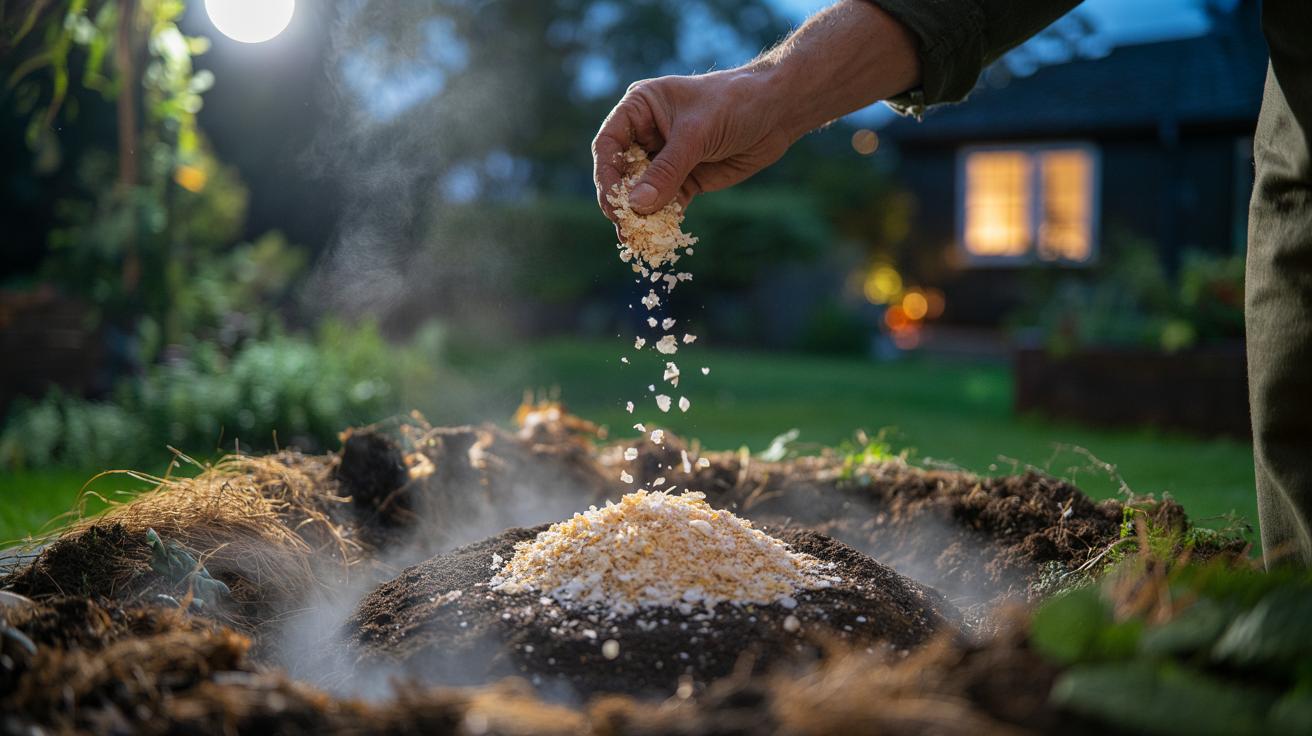
Fold shells into active layers, never as a thick cap. Aim for a sprinkle—a couple of handfuls of crushed shell—each time you add a bucket of kitchen greens and a matching volume of dry browns (shredded paper, straw, leaves). Keep moisture like a wrung-out sponge. For a 1 m³ heap, a dozen shells a day is fine; just avoid heaps that look like a beach. In hot compost, tuck shell-rich material into the warm core; in cooler heaps, mix through to avoid stratification. Consistency beats quantity: small, regular additions outperform occasional big dumps.
Worm bins love powdered shells. They provide grit for worm gizzards and a stable micro-pH. Use a teaspoon per feeding zone, mixed well. If you’re wary of pathogens, your oven-dry step suffices, though a properly managed compost reaches temperatures that neutralise risks. Watch the odour meter: if the heap smells sweet-earthy, you’re on track; if it’s sour, adjust with more browns and a fork to lift airflow.
Soil Science: Nutrients, pH, and Timing
Here’s what eggshells actually deliver, stripped of myth. Their calcium carbonate dissolves in the presence of carbonic and organic acids, not instantly but progressively, so the net effect is a slow-release liming at a micro scale. In most UK gardens—often mildly acidic to neutral—that’s helpful. In chalky soils, the effect remains modest because shells release slowly and locally. Crushed shells will not overhaul your soil pH overnight; they nudge, they don’t bulldoze.
| Component | Role in Compost/Soil | Release Speed |
|---|---|---|
| Calcium carbonate | Buffers acidity, strengthens plant cell walls, improves microbial comfort | Weeks to months (faster if powdered) |
| Trace magnesium & phosphorus | Minor nutrient support; complements balanced fertiliser regimes | Slow, tied to shell dissolution |
| Shell fragments | Enhance aeration and water pathways in heap and soil | Immediate structural effect |
| Inner membrane (protein) | Small nitrogen boost; feeds microbes | Relatively quick |
On timing, expect powdered shells to begin influencing compost chemistry within a fortnight in warm, moist conditions. Coarser grits take a season. Plants sense calcium through the water stream, so benefits show where roots explore amended soil. As for pest myths: sharp shells rarely stop slugs and snails in a wet border; rain mats them down. Rely on shells for nutrition and structure, not as a standalone pest barricade.
Overnight Gains: What Happens While You Sleep
Night is busy time in the heap. Temperatures hold steady, condensation beads on warm particles, and CO₂ dissolves into moisture to form weak carbonic acid. On contact, that acid nibbles at the edges of calcium-rich shell grit. Microbes lay down biofilms, then peel nutrients loose. It’s quiet chemistry, no drama, yet by dawn the heap has subtly shifted—more friable, better aerated, and a touch less acidic in places. Compost works 24/7; your shells begin contributing from the first night they’re mixed in.
Scale the habit. A household eating half a dozen eggs weekly can generate enough shell to condition an average allotment bed across the season when combined with kitchen scraps and garden browns. Pair with balanced inputs—coffee grounds, leaf mould, shredded cardboard—and you’ve built a resilient, self-feeding soil loop. If you’re after quicker results, target pots and seed beds with the finest grind, blending into finished compost before potting. The trick is rhythm: crack, rinse, dry, crush, sprinkle. Tiny acts, repeated, create a compost that smells like woodland and grows like a dream.
Eggshells won’t headline a fertiliser advert, yet they excel as patient infrastructure: stabilising pH, feeding microbes, and giving roots a kinder medium. One breakfast becomes one night’s work for your heap, and that rhythm, week after week, builds soil that shrugs off droughts and downpours alike. So, gather a jar, crush what you crack, and feed the pile before bed. When you wake, your compost will have made another small stride. What nightly composting habit will you adopt to turn kitchen ritual into tomorrow’s stronger soil?
Did you like it?4.7/5 (29)