In a nutshell
- 🍵 Tea bag tactic: A quick tea-based brine uses tannins to relax proteins, helping meat retain moisture without masking flavour.
- ⏱️ 10-minute method: Brew strong black tea, cool it, add salt, a pinch of bicarbonate of soda, and soak thin cuts for 6–10 minutes before a hot sear.
- 🥩 Best matches: Use black tea for beef and pork, green for poultry, oolong for lamb; ideal for chicken breast, flank steak, pork loin, and lamb leg steaks.
- 🧪 Safety and troubleshooting: Cool tea before soaking, discard brine, cook poultry to 75°C; reduce brew time if bitter, add a touch more salt if the texture is squeaky.
- 🔥 Better browning, cleaner flavour: Pat dry, sear hard, and finish with butter or aromatics for tender, succulent results without heavy marinades.
Britain’s love affair with tea has found an unexpected stage: the frying pan. Home cooks are turning to a tea bag tactic that promises softer, juicier meat in minutes, not hours. It sounds like a prank. It isn’t. The secret lies in tea’s gentle chemistry and a smart, speedy brine that works in the time it takes to clear the chopping board. In under ten minutes, you can transform lean, easily dried-out cuts into tender, flavourful supper centrepieces. The method is frugal, simple, and surprisingly consistent, delivering lift without masking the meat’s character. Here’s the science, the steps, and the pitfalls to avoid.
Why Tea Tenderises Meat
Tea leaves carry tannins, polyphenols that interact with meat proteins on the surface, changing how they bind and retain moisture. In a short soak, those tannins act like a mild primer: they season, they subtly relax tight muscle fibres, and they boost browning by promoting a drier, more even surface after patting down. The result is meat that resists the dry, squeaky chew that plagues quick weeknight cooking. Black tea is the workhorse, rich in tannins and gently malty. Green tea contributes grassy, fresh tones that flatter poultry. Oolong straddles the two, adding toasted fruit notes to pork and lamb.
There’s also the brine effect. A pinch of salt and a whisper of bicarbonate of soda push the pH up and help proteins hold onto water, fast. Think of it as a soft-focus filter rather than a full marinade. Ten minutes won’t penetrate deeply, yet it will noticeably soften the bite of thin steaks, stir-fry strips, or schnitzel-sized cutlets. Used correctly, tea lends tenderness without mushiness and fragrance without perfume.
The 10-Minute Method, Step by Step
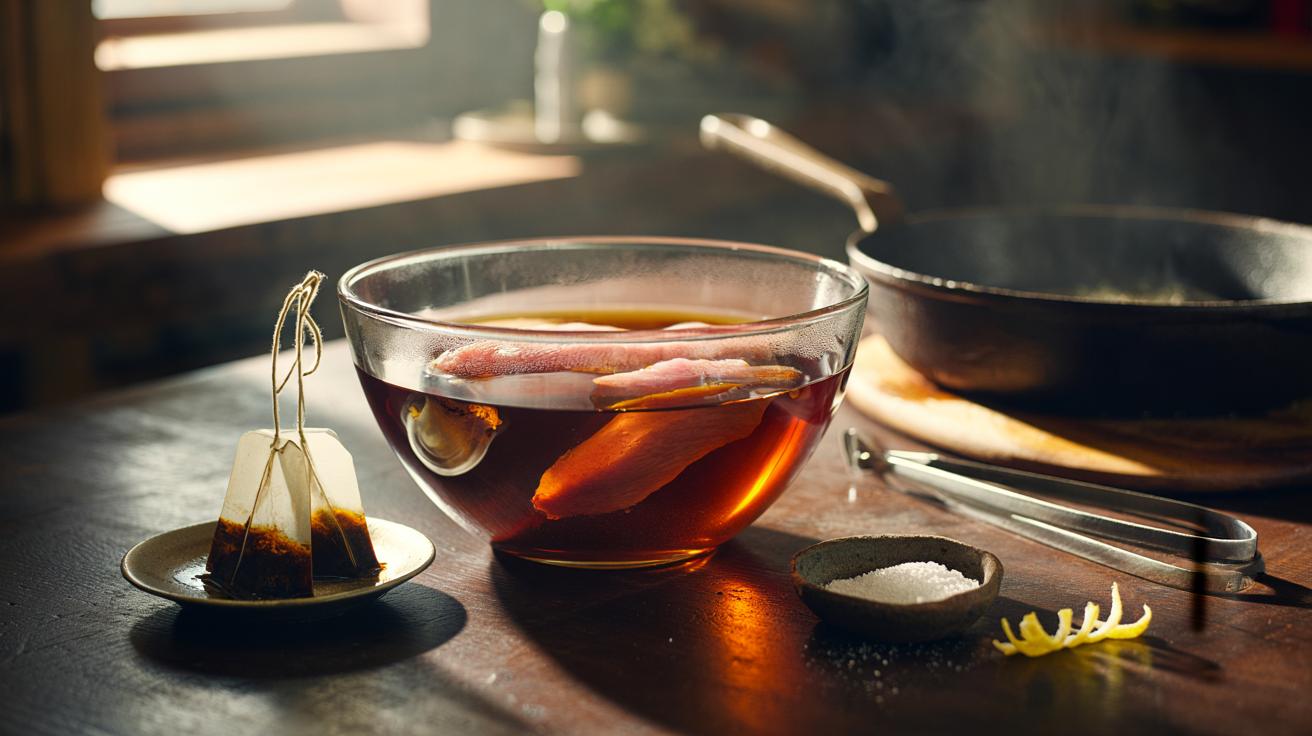
Brew 250–300 ml of very strong tea with 2 tea bags (Assam or English Breakfast are reliable), steeping 4–5 minutes. Remove the bags and cool the liquor to room temperature or fridge-cold; speed it up with ice if needed. Stir in 1¼ tsp fine salt, ½ tsp sugar, and a small pinch (about 1/8 tsp) of bicarbonate of soda. This is your quick tea brine. Slice meat to 1–2 cm thickness for even results, then submerge for 10 minutes. Thicker joints won’t benefit; keep this for weeknight cuts.
Lift the meat, pat thoroughly dry, and season lightly; skip extra salt if you’re cautious. High heat is essential. Pan-sear in a slick of neutral oil until browned, then add butter or aromatics in the final minute. Cook poultry to a safe 75°C in the centre and rest beef or pork for five minutes to redistribute juices. The surface dries faster after the tea bath, so browning can happen briskly; watch it closely. For stir-fries, drain well, toss with cornflour, then hit a roaring hot wok for saucy gloss and snap.
Best Cuts and Tea Pairings
Not every cut sings with tea. Choose pieces that cook quickly and suffer from dryness or stringy bite when rushed. Chicken breast, turkey escalopes, thin beef steaks like flank or rump, pork loin medallions, and lamb leg steaks all qualify. Richer teas bring roasted depth; lighter leaves brighten lean meats. Add a strip of lemon zest or a slice of ginger to the brew if you want an aroma lift without changing the base technique. Keep the extras restrained—tea is the star and won’t thank you for a spice onslaught.
| Tea Type | Flavour Notes | Tannin Level | Best Cuts | Soak Time | Notes |
|---|---|---|---|---|---|
| Black (Assam, Ceylon) | Malty, brisk | High | Beef flank, pork loin | 8–10 min | Big tenderising lift; watch salt |
| Green (Sencha) | Fresh, grassy | Medium | Chicken breast, turkey | 6–8 min | Delicate; avoid over-steeping |
| Oolong | Toasty, fruity | Medium | Pork shoulder steaks, lamb leg | 8–10 min | Great with citrus peel |
| Earl Grey | Bergamot, floral | Medium | Duck breast, pork | 6–8 min | Use lightly; aromatic |
If in doubt, start with black tea and a short soak, then adjust by a minute or two next time. Keep notes; the sweet spot varies with thickness, breed, and pan heat. It’s fast, forgiving, and distinctly British in spirit.
Safety, Flavour Tweaks, and Troubleshooting
Food safety first. Always cool tea before it meets raw meat and keep the soak to ten minutes max, in the fridge if your kitchen is warm. Discard the brine; don’t reuse. Cook poultry to 75°C internally; for beef and lamb, choose your preferred doneness but sear vigorously. If your meat tastes tannic or bitter, your tea was over-steeped—cut the brew time, not the soak time. A dry, squeaky finish signals insufficient salt or overcooking; add ¼ tsp more salt to the brine or lower the pan heat a notch.
Want extra tenderness? For very lean cuts, whisk in 1 tsp yoghurt or ½ tsp rice vinegar to the cooled tea for a gentle acid nudge. A dash of soy brings umami; honey helps caramelisation. Resist heavy garlic or chilli in the brine—save those for the pan, where they’ll stay bright. And yes, you can scale: batch-soak portions for a dinner party, then cook to order. The method rewards calm mise en place and a hot pan more than anything else.
Ten minutes, two tea bags, one pan: that’s the promise, and in testing it delivers, turning ordinary midweek chops into supple, succulent plates with minimal fuss. The flavour reads clean rather than perfumed; the texture wins friends. This is not a marinade miracle but a tight, clever shortcut that respects the meat you bought. Brew strong, keep it cold, count to 600, then sear like you mean it. Which cut will you try first—and what tea will you dare to use for your own signature twist?
Did you like it?4.7/5 (29)