In a nutshell
- 🧪 Rubber band pot lid creates a tiny vent that lets steam escape, collapsing foam and preventing boil-overs instantly using simple, reliable physics.
- 🔧 Step-by-step fit: place a heat-resistant band on the rim, set the lid to form a hairline gap, then “tune” by nudging the band or adjusting heat for a steady, gentle vent.
- 🛡️ Safety first: keep bands away from flames, use silicone for higher temps and durability, avoid latex if sensitive, and monitor surge-prone dishes like milk or jams.
- 🧯 Know the limits: if rims are warped or thin, the hack may slip—choose a heavier lid, a silicone ring, or the classic wooden spoon across the pot for stability.
- 💷🌿 Cost and sustainability: reusable bands are pennies per use, cut energy by enabling covered simmering, reduce cleanup chemicals, and suit UK kitchens from halls to campsites.
Every cook knows the dread. Pasta surges, starch foams, and in seconds the hob is a slick, sputtering mess. Here’s a hack with surprising elegance: the rubber band pot lid. Slip a heat-tolerant band between lid and pan to create a tiny vent, and the boil is tamed before it misbehaves. The fix takes seconds. It costs pennies. Most importantly, it harnesses simple physics—controlling steam release and bubble size—to prevent boiling over instantly. Done right, it’s safe, repeatable, and kind on energy bills because you can keep the heat steadier without constant babysitting or lid-lifting.
Why a Rubber Band Stops Boil-Overs
Boil-overs begin with starch-laden foam forming a carpet across the liquid. That blanket traps steam and pushes pressure upward until it surges past the lid. Introduce a consistent gap—even two or three millimetres—by placing a rubber band as a spacer, and the dynamic changes. Steam escapes earlier, bubbles collapse faster, and foam loses its scaffolding. The lid still holds heat, but not the kind that encourages runaway froth.
In practical terms, the band acts as a compliant gasket. It cushions the lid, dampens rattles, and shapes a controlled vent at one point on the rim instead of random spurts around the circumference. You’ll notice the boil becomes calmer and more audible rather than explosive. The moment you hear steady, gentle venting, you’ve hit the sweet spot. Fewer panics. Less stirring. Far less wiping down the cooker after a spirited spaghetti night.
Not all bands are equal. Silicone cooking bands or wide, high-quality rubber bands hold shape under steam and resist perishing. Thin, old bands can snap, sag or leach odour. Choose thoughtfully and you promote both safety and consistency across soups, pulses, rice and custards.
Step-by-Step: Fitting a Band to Your Pot Lid
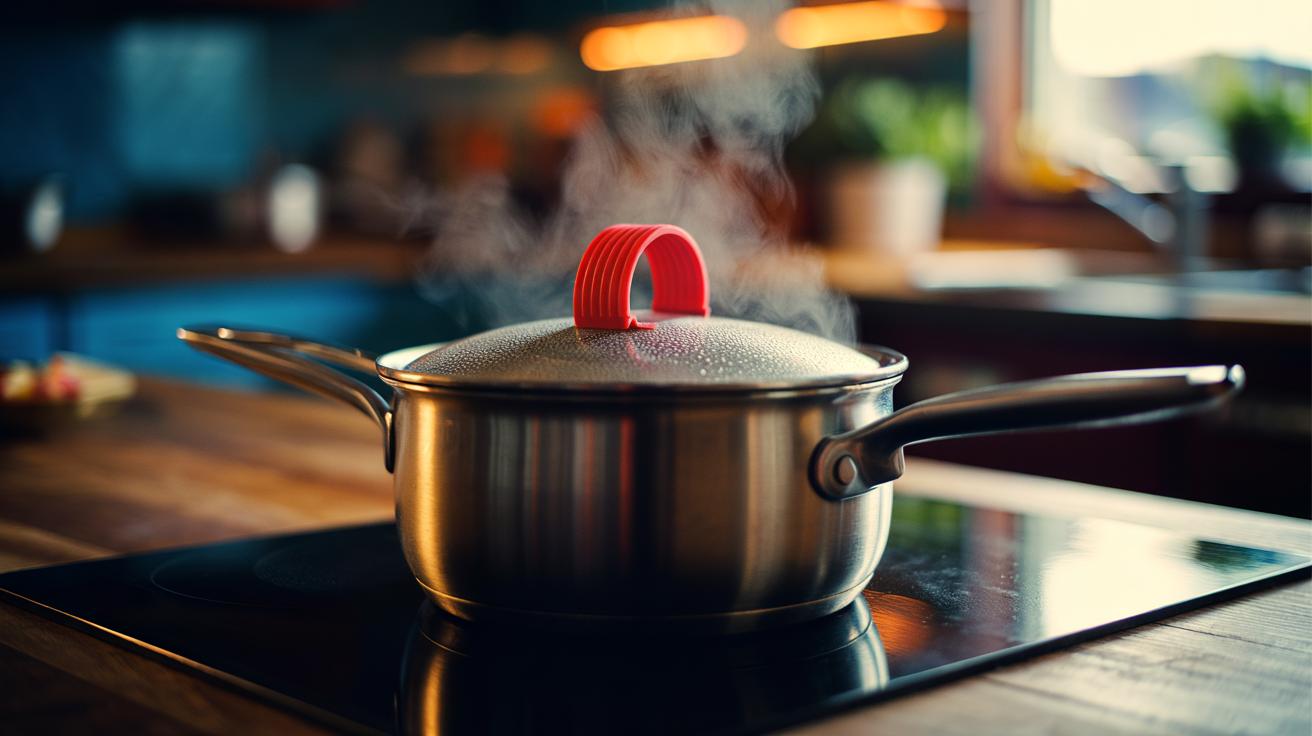
Start with a clean, wide saucepan and a lid that sits evenly. Stretch a heat-resistant band over the lip of the pan so a short section lies on the rim where you want the vent—ideally opposite the handle to avoid drips onto your hand. Place the lid down gently on top. You should see a hairline gap over the band, but the lid must still feel secure. If the lid rocks dramatically, choose a thinner band or shift its position.
Bring water to a lively simmer and observe. If steam pours furiously, move the band a fraction or reduce the heat a notch. If the lid seals and rattles, slide the band slightly to re-open the vent. Think of it like tuning a radio: small adjustments, big results. For starchier dishes—pasta, oats, legumes—start with a slightly larger gap to tame foam early, then tighten the vent by rotating the lid once the boil stabilises.
After cooking, remove the band with tongs or a spoon if it’s hot. Wash in warm, soapy water and dry flat so it keeps its length. Good maintenance matters; grime degrades rubber and can carry off-flavours. A tidy band today is a reliable spacer tomorrow.
Safety, Materials, and When to Avoid the Hack
Safety first. Never let the band touch a naked flame. Keep it inside the pan’s footprint, well away from gas flare or electric coil edges. If your lid’s metal rim runs scorching hot, use a silicone band designed for cooking rather than a stationery drawer special. And always keep an eye on high-sugar jams, milk or caramel sauces; they surge unpredictably and may still need a watchful stir.
Material choice dictates reliability. Natural rubber works for brief, steamy conditions around 100°C but degrades faster, especially with oils. Silicone tolerates higher temperatures and cleans up without perishing. For allergy-sensitive households, avoid latex-based bands entirely. The matrix below offers a quick buyer’s guide for UK kitchens.
| Band Type | Typical Max Temp | Pros | Watch-outs | Approx. UK Cost |
|---|---|---|---|---|
| Silicone cooking band | Up to 260°C | Durable, odourless, dishwasher-safe | Can slide on very smooth rims | £5–£10 (pack) |
| Wide natural rubber band | ~120°C | Cheap, grippy, easy to find | Perishes with oil/UV; latex concerns | Pennies each |
| Elastic hair tie (no metal) | ~120–150°C | Soft, stable, decent spacer | Check for glue seams; can soak up odours | £2–£4 (pack) |
If your pan rim is razor-thin or warped, the hack may not sit securely. Swap to a heavier lid, a silicone ring, or use the classic wooden spoon across the pot. Stability beats cleverness every time.
Cost, Convenience, and Sustainability in a British Kitchen
Frugal and green can coexist. A single reusable band keeps pasta nights calmer for months, potentially cutting energy use because you can simmer under a vented lid instead of boiling uncovered. Less splatter equals fewer aggressive cleaning products, which means fewer plastics and chemicals down the drain. It’s a tiny intervention, but repeated weekly it adds up, quietly and convincingly.
There’s convenience too. The hack is portable—great for student halls, rentals with unreliable lids, or camping stoves where a precise simmer is a luxury. Slip a spare in the utensil drawer and you’ve got a boil-over insurance policy for stews, grains and stock. It turns a chaotic moment into a controlled routine. And unlike specialised anti-boil discs or foam-stopping gadgets, a band weighs almost nothing and stores anywhere.
Of course, it’s not a silver bullet. Very starchy water still wants taming with portioned salt, a dab of oil, or a timely stir. But as first response—fast, cheap, elegant—the rubber band earns its place alongside the wooden spoon and lid lifter. It’s the underestimated tool that keeps supper on track and the hob spotless.
Home cooking thrives on small, clever fixes, and the rubber band pot lid might be the smallest of the lot. It works with physics, not brute force, giving steam a path and foam a fight it can’t win. Keep one by the cooker, learn your pot’s sweet spot, and boil-overs fade into memory. Your pasta will thank you, and your patience will too. What other tiny, low-cost tweaks would transform your everyday cooking if you tried them tonight?
Did you like it?4.6/5 (20)