In a nutshell
- 🔥 Foil-wrapped grates boost conduction, reflect heat, tame flare-ups, delivering even, juicy burgers in ~4 minutes.
- ⏱️ Follow the method: 80/20 mince, 1.5 cm patties, tight heavy-duty foil with vents, 10‑minute preheat, 2 minutes per side, 1‑minute rest.
- 🌡️ Prioritise safety: use a thermometer; aim for 75°C instant or 70°C for 2 minutes for minced beef.
- 🛠️ Kit and care: oil the foil, maintain airflow, recycle clean aluminium; consider a reusable cast-iron plancha for similar results.
- 📊 Quick reference: thickness dictates time (smash 3 min, standard 4, thick 6–7); flip when juices bead and add cheese in the final 30–45 seconds.
In back gardens across Britain, a small tweak is speeding up summer suppers: wrapping grill grates in aluminium foil to supercharge burgers. The promise is bold. Evenly cooked, juicy patties in just four minutes. It sounds like pub talk, yet the physics is solid and the method surprisingly simple. By smoothing hot surfaces and taming flare‑ups, the foil turns a temperamental barbecue into a predictable hotplate, shaving minutes without sacrificing crust. I tested it on gas and charcoal, in drizzle and in sun. The results were consistent. Fast sear, even centres, fewer tears. Here’s how it works, and how to do it safely, cleanly, and repeatably.
How Foil-Wrapping Transforms Heat on the Grill
Standard grates cook by three forces: radiant heat from coals or burners, conduction where metal meets meat, and convection from hot air. Open bars are patchy. Some parts scorch, others lag. When you wrap the grate tightly in heavy-duty aluminium foil, you create a continuous hot surface that boosts conduction and evens out hot spots. The foil also reflects infrared energy back at the food, accelerating browning. Dripping fat no longer feeds towering flames, so the crust forms without soot or bitter flare‑ups. That’s the hidden win. Controlled heat equals predictability.
Two extra details matter. First, preheat longer than you think. Ten minutes with the lid down allows the foil to reach a steady state, not just the air above it. Second, pierce small drainage slots—think pencil-width—so rendered fat can escape without pooling. A thin layer of oil brushed on the foil creates a non-stick film and improves contact. The effect? A Maillard-driven crust in under two minutes per side, while the centre climbs smoothly to target temperature.
Step-By-Step Method for a Perfect Four-Minute Burger
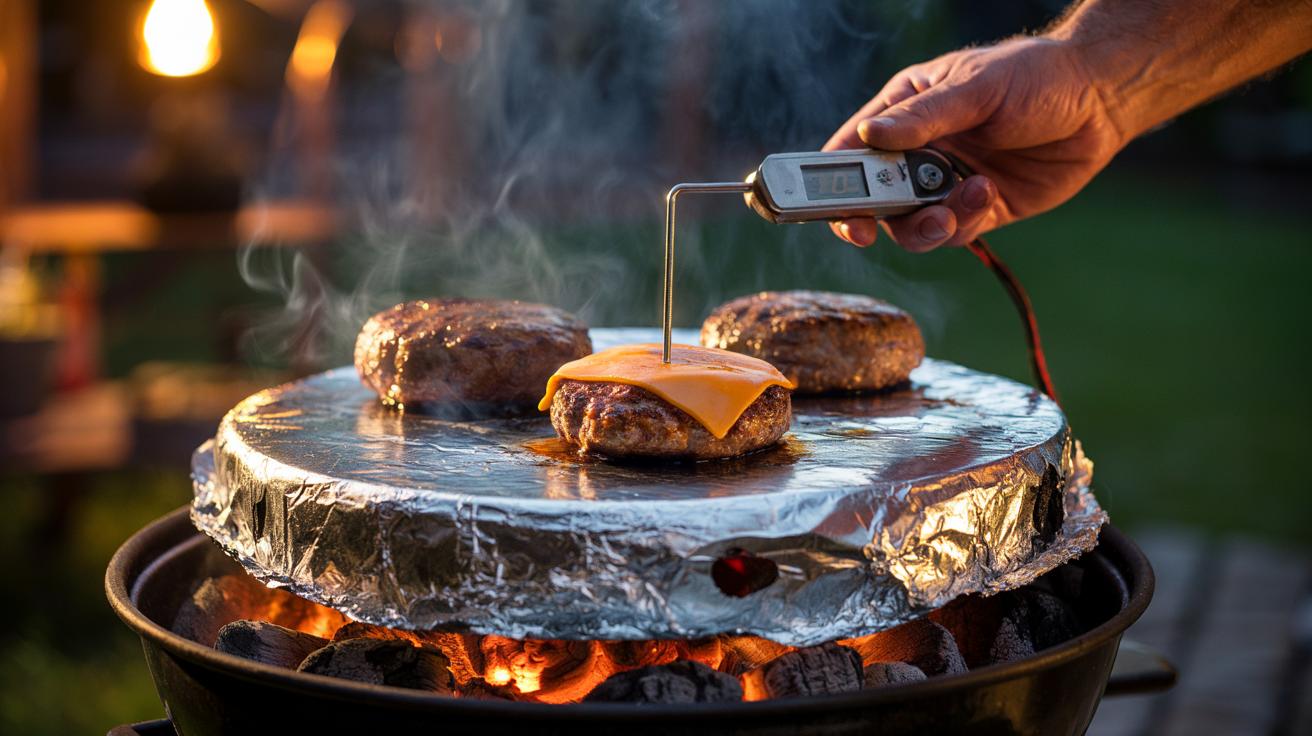
Use 80/20 beef mince (about 20% fat). Weigh patties to 120–140 g, 1.5 cm thick. Season just before cooking: salt, black pepper, nothing fussy. Wrap the grate in heavy-duty foil, dull side up, pulled tight. Puncture a grid of vents every 5–7 cm. Preheat on high with the lid down for 10 minutes until the foil surface is fiercely hot; a drop of water should dance instantly. Lightly oil the foil. Place burgers. Lid down. Do not press. Two minutes. Flip. Two minutes. Add cheese in the last 30 seconds if you like. Rest one minute off the heat to let juices redistribute. Use a thermometer, not guesswork.
Safety matters. UK guidance for minced beef is different from steak: the interior is not sterile. For best safety, aim for 75°C (167°F) instant or 70°C (158°F) for 2 minutes. If you prefer pink, you accept a higher risk; use freshly ground, high-quality beef and strict hygiene. Gas grill running hot? Trim 10–15 seconds per side. Charcoal a bit cool? Add 20–30 seconds. This method thrives on consistency. Keep thickness uniform, edges smooth, and the lid closed to maintain a stable, convective envelope that finishes the centre while the foil drives the sear.
Equipment, Safety, and Sustainability Considerations
Choose heavy-duty foil. It resists tearing when you flip and won’t sag under pooled fat. On gas grills, leave a 2–3 cm gap at the edges of the foil so burners can breathe and to prevent smothering. On charcoal, open the vents; you need airflow to avoid acrid smoke. Keep the surface lightly oiled to reduce sticking, especially with lean meat or plant patties. If marinating with acidic ingredients (wine, vinegar, citrus), pat dry; strong acids can pit aluminium and make sticking worse. Clean fire, clean foil, clean flavour.
Concerned about waste? Many UK councils accept clean aluminium foil for recycling—wipe or rinse it, ball it fist-sized, and pop it in the recycling bin. For a reusable alternative, consider a cast-iron plancha or thick steel griddle; they mimic the conductive benefit and outlast everything. PTFE grill mats work in a pinch but run cooler. Finally, keep a spray bottle for flare-ups below the foil and a thermometer in your pocket. Control those two, and you will control your timing, texture, and safety on any barbecue.
Timing, Thickness, and Doneness at a Glance
Times below assume a lid-down grill at 230–260°C (450–500°F), foil-wrapped grate, and patties at room temperature. They’re guides, not commandments. Your grill’s heat retention and wind exposure matter. So does patty shape. Pressing a shallow dimple in the centre helps stop doming and keeps contact with the foil for a better crust. Four minutes is realistic only with a hot, stabilised grill and patties no thicker than 1.5 cm. Add 30–60 seconds per side for chill or thicker patties.
| Patty | Thickness | Time per side | Total | Target internal temp |
|---|---|---|---|---|
| Smash-style | 0.8 cm | 1–1.5 min | 3 min | 65–70°C (149–158°F) |
| Standard | 1.5 cm | 2 min | 4 min | 70–75°C (158–167°F) safe |
| Thick | 2.0 cm | 3 min | 6–7 min | 70–75°C (158–167°F) safe |
Always rest for one minute off heat; the carryover is small but evens the centre. For cheese, add in the final 30–45 seconds and close the lid to melt without overcooking. If you see beading juices on top at the two-minute mark, you’re ready to flip. If smoke spikes sharply, trim heat slightly; sustained heavy smoke hints at fat pooling—add a few extra vents in the foil and carry on.
Foil-wrapped grills compress the chaotic variables of outdoor cooking into something close to certainty. They make weeknight burgers feasible, even in a gusty British evening. The sear stays loud, the centre stays tender, and the clock stays kind. That four-minute promise? With a hot lid, tidy vents, and consistent patties, it holds. You’ll spend less time hovering, more time eating. What topping will you crown your next four-minute burger with—and will you dare test the method on lamb, halloumi, or a plant patty next?
Did you like it?4.4/5 (30)