In a nutshell
- 🧠 Smaller plates reduce cognitive load and decision fatigue, acting as a gentle default that right-sizes portions when attention is stretched.
- 👀 Visual cues matter: the Delboeuf illusion, plate–food colour contrast, and rim width shift what looks like “enough,” shaping portion size without willpower.
- 🛠️ Practical design wins: use 20–24 cm plates, tall water glasses, pre-plating at the hob, consistent scoop sizes, and salad-first queues to nudge healthier choices.
- ⚠️ Not foolproof: seconds and energy-dense foods can blunt the effect; pair small plates with protein, fibre, fluids, and a brief pause before seconds to support satiety.
- 🎯 Big picture: smart choice architecture quietly trims self-served volume (often ~9–20% in labs) and makes healthier eating feel effortless, not restrictive.
We like to think we decide dinner with logic, willpower, and a tidy meal plan. In truth, busyness hijacks that process. By the time the oven door opens, our cognitive load is high and our choices lean on shortcuts. That is where smaller plates do their quiet work. They reshape the visual frame, simplify decisions, and change what “enough” looks like without a lecture. In chaotic kitchens and hurried evenings, environment beats intention. This isn’t a diet trick so much as clever design: subtle cues that help us serve just a little less and notice satisfaction a little sooner—precisely when attention is thinnest.
Cognitive Load at the Dinner Table
After long days of emails, deadlines, and parenting, the brain’s limited workspace—its working memory—is jammed. We face decision fatigue. Under strain, deliberation gives way to heuristics: the quick rules that whisper “fill the plate” or “finish what’s there.” Smaller plates exploit that bias in our favour. They set a gentler default, a natural stopping point that trims portions without debate. When the mind is busy, the plate becomes the plan. A tighter visual boundary signals completion sooner, reducing the mental arithmetic of “How much is right?” at exactly the moment we least want to think.
This is classic choice architecture. Rather than forcing restraint, it changes the context that drives automatic behaviour. The rim is closer; the food looks ample; appetite meets a plausible end. That frees bandwidth for pleasant conversation or checking in with satiety, not counting forkfuls. In cafeterias and homes alike, defaults often outperform advice because they operate where attention actually lives—in the fast, intuitive system that guides most eating. The result isn’t moral triumph, just an easier path to adequacy.
Small shifts that spare mental effort tend to stick. And stickiness beats perfection in the long run.
The Visual Illusions That Shape Portions
The eye fools the stomach. The Delboeuf illusion—a classic perception quirk—makes identical circles seem smaller when surrounded by a larger ring. On big plates, a regular spoonful looks meagre, so we add “just a bit more,” then a bit more again. Shrink the plate and the same volume appears generous, tilting our instinctive calibration toward portion size sanity. What looks like “enough” often isn’t a nutrition choice—it’s a perception trick. Colour matters too: low plate–food contrast blurs edges, inviting over-serve; high contrast sharpens boundaries and brakes the pour. Even wide ornamental rims extend the visual field, nudging us to overshoot.
There’s also the variety effect: more flavours on one wide canvas mean more bites “to compare,” boosting intake beyond hunger. Narrow the canvas or partition it, and the urge to sample everything softens. These are not commandments; they’re levers. In lab settings, modest reductions in self-served volume translate to fewer calories without a sense of loss, especially when meals are balanced with protein and fibre. The beauty is quiet: you eat a normal plateful that simply happens to be smaller—and you still feel like you had dinner.
| Cue | Mechanism | Practical Tip |
|---|---|---|
| Plate diameter: 23 cm vs 28 cm | Amplifies Delboeuf illusion; can cut self-served volume by ~9–20% in lab settings | Use 20–24 cm plates for everyday meals |
| High plate–food colour contrast | Sharpened edges improve portion detection | Serve pale foods on dark plates, and vice versa |
| Wide decorative rims | Expands visual frame; invites overserving | Choose narrow-rim plates |
| Many items on one plate | Variety effect increases intake | Partition the plate or use small bowls |
Designing Kitchens That Nudge Better Choices
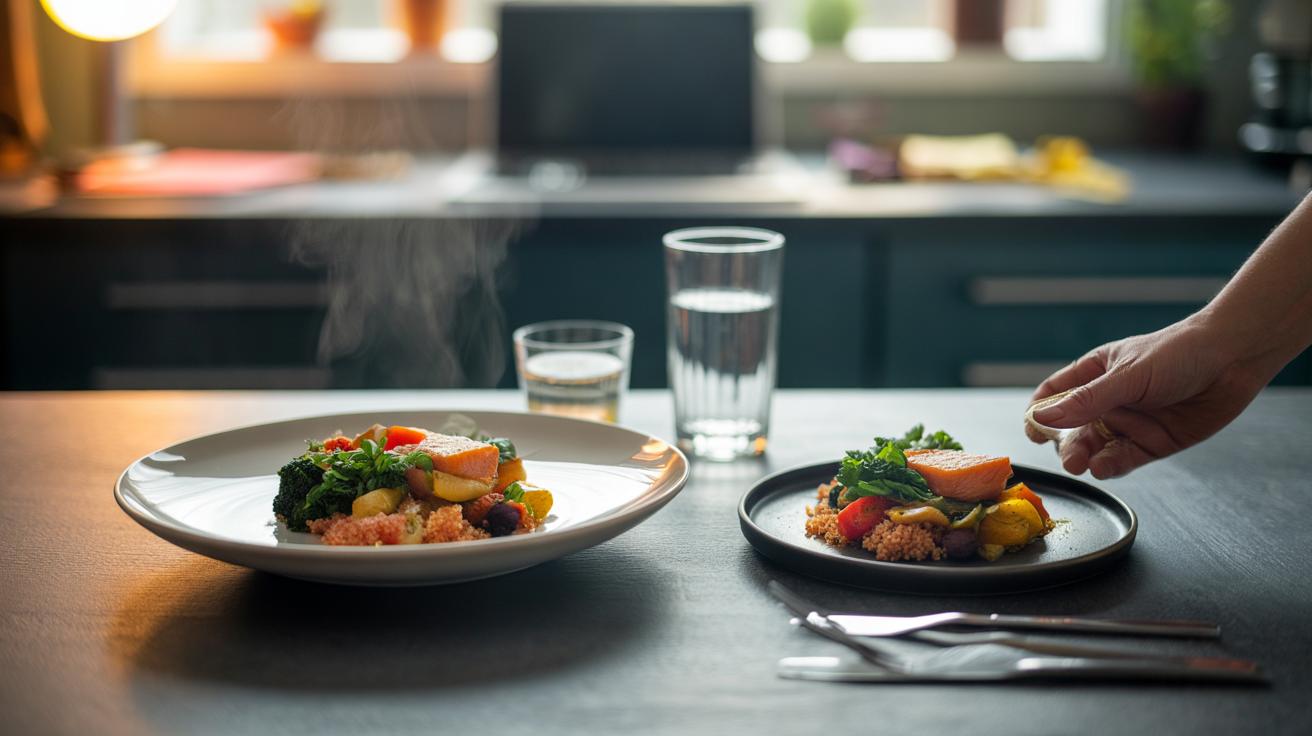
Want results without a daily pep talk? Change the kit. Put smaller dinner plates front and centre in the cupboard. Stack the larger ones higher for roasts and parties. Make vegetable bowls generous and obvious, grains modest and deeper so volume looks abundant. Make the good option easy, and the easy option good. Pour juice into small glasses; water into tall ones. Keep a ladle that measures roughly one serving. Pre-plate at the hob rather than serving family-style when tired, because the table invites “just one more spoon.” These are micro-frictions that spare willpower.
In shared spaces—work canteens, school halls—the same logic scales. Place salads first in the queue, proteins next, starches last. Offer high-contrast plates and narrow rims. Label serving spoons by portion (“1 scoop = 1 serve”) and keep them consistent. Home cooks can try the “half-plate” rule: half colourful plants, a quarter protein, a quarter starch, sized to a smaller dish. Keep seconds available for veg and broth, less so for calorie-dense sides. Small plates don’t cure overeating, but they align choice architecture with intentions, which is what busy lives actually need.
When Smaller Plates Backfire—and What to Do
There are caveats. Some diners simply go back for seconds, negating the nudge. Highly energy-dense foods can pack the same calories on a smaller surface. Restrictive mindsets turn a helpful cue into a scolding rule, breeding rebellion later. And athletes, teenagers in growth spurts, or people rebuilding weight need larger portions without guilt. Smaller plates are a tool, not a rule. The fix is context: pair plate size with satiety-friendly composition—protein, fibre, fluid—and a pause ritual. A two-minute break before seconds lets fullness signals catch up to appetite.
Practical tweaks help. Serve water automatically. Start meals with salad or soup in a small bowl. Use single-serve ramekins for crisps, nuts, and desserts, where density is high. If seconds are habitual, keep veg at arm’s reach and place mains a small walk away. Calibrate by appetite: if you’re consistently peckish after smaller plates, step up to a medium plate or add another veg side. The point is not to eat less at all costs, but to right-size portions so satisfaction and health can coexist without constant mental effort.
Smaller plates won’t change your values. They change the stage on which your values perform. By easing cognitive load, clarifying visual cues, and shaping defaults, they help ordinary meals land in the “enough” zone more often, with less fuss and no sermon. The rest is common sense: nourishing food, enjoyable company, and habits you can live with on hectic weekdays as well as calm Sundays. If your kitchen is a theatre for everyday decisions, what simple prop will you swap in first to make healthier choices feel effortless?
Did you like it?4.5/5 (25)